Subscribe

Bins, Batteries and Built Environments

Fires caused by improperly discarded batteries are no longer isolated or unusual events. Across the UK, fire and rescue services, local authorities and waste operators are reporting a steady increase in incidents linked to batteries entering the general waste stream.

Lithium-ion cells from everyday items such as mobile phones, laptops, power tools, e-scooters and disposable vapes are frequently implicated. When damaged, crushed or short-circuited, these batteries can ignite violently, producing intense heat and flammable gases.


Recent incidents highlight the breadth of this risk. Local authorities including Tower Hamlets, Westmorland and Furness, Cambridge and North Warwickshire have all reported fires in refuse collection vehicles caused by discarded batteries being compacted during routine waste rounds. In some cases, these fires have forced crews to unload waste at the roadside or withdraw vehicles from service following fire service intervention. In one incident in North Warwickshire, a bin lorry fire caused by a lithium-ion battery resulted in the vehicle being permanently damaged and taken out of service.


Reports told of replacement bin lorry costs running between £125,000 to £250,000 depending on the damage and repairs required – not a sum many councils can afford these days. Waste processing facilities have also experienced multiple battery-related fires, often linked to small electrical items concealed within mixed recycling. Research by the Environmental Services Association and Material Focus has estimated that battery-related fires across the UK waste stream (including bin lorries and recycling centres) cost waste operators, fire services and the environment (in clean up costs) around £158 million per year.


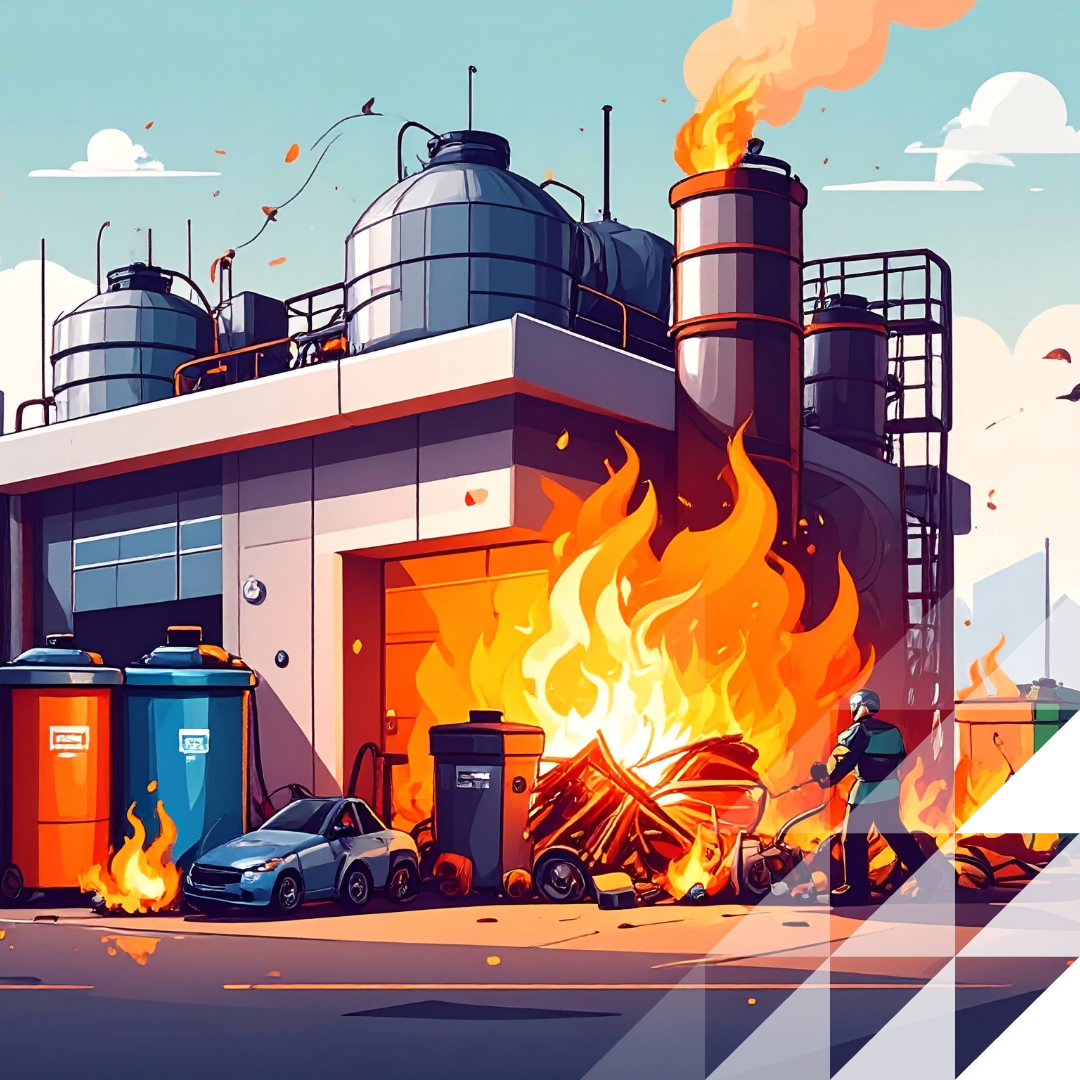
While waste vehicles and recycling facilities represent one part of the problem, the fire risk does not begin or end there. Communal bin stores, external refuse areas and underground car parks are increasingly recognised as potential ignition points, particularly in high-density residential buildings such as social housing, student accommodation and luxury high-rise flats. These environments present a unique combination of ignition likelihood, environmental challenges and potential consequences that require careful consideration within fire risk assessments and fire strategies.


Understanding the nature of battery-initiated fires


Lithium-ion batteries are widely used because of their high energy density and compact size. However, this same energy density contributes to their fire risk when the battery structure is compromised. Damage to the internal layers of a battery can lead to thermal runaway, a rapid and uncontrolled increase in temperature driven by internal chemical reactions. Once initiated, thermal runaway can cause the battery to ignite, release flammable gases and reach temperatures exceeding several hundred degrees Celsius.


In waste scenarios, damage often occurs through crushing, puncturing or compaction. Batteries disposed of in communal bins may be crushed by other waste, by bin lids or by compactors. Fires may start immediately or develop over time, with smouldering preceding ignition. In enclosed or semi-enclosed spaces, this delayed development increases the risk that a fire will go unnoticed until it has grown significantly.


Battery fires are also difficult to suppress. Even when flames appear to be extinguished, residual heat and internal reactions can cause re-ignition. For fire safety professionals, this combination of delayed ignition, high heat release and challenging suppression reinforces the importance of early and reliable detection.


Communal bin stores and external refuse areas


Communal bin stores are common features in residential developments. They are often located close to the building fabric for convenience, sometimes within basements, service yards or under crofts. Even when external, these stores may be partially enclosed or sheltered, creating conditions where heat and smoke can accumulate.


These areas are difficult to protect from a detection perspective. They are frequently exposed to dust, moisture and temperature variation. In many cases they are open to wind-driven rain or subject to wash-down during cleaning. The widespread use of small battery-powered consumer items, including vapes and similar portable electronics, has added to the risk profile. Although the sale of single-use disposable vapes has now been banned in the UK, large numbers of devices remain in circulation and continue to enter the waste stream, often discarded incorrectly and in a damaged state. All of which adds to the fire risk profile.


Optical smoke detection is generally unsuitable in these environments. Background contamination and airflow can lead to false alarms or delayed response, and many conventional smoke detectors are not rated for external or semi-external use. Heat detection is therefore often a more appropriate choice, provided it is selected and installed with environmental conditions in mind.


Bin Fires 01

Underground car parks, luxury residential buildings and electric vehicles

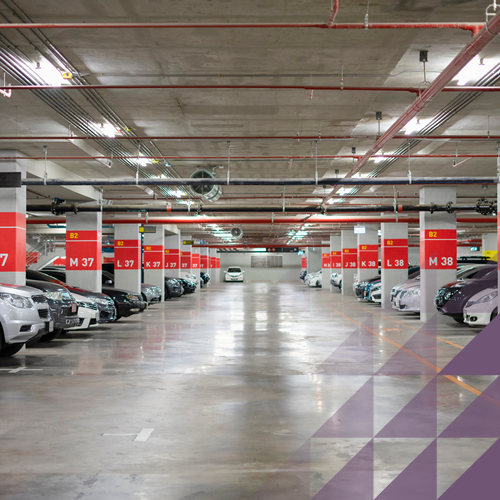
Underground car parks introduce a further layer of complexity, particularly in high-density and luxury residential developments in the UK’s city centres. Secure basement parking is now a standard feature of many high-rise schemes and for inner-city locations it is increasingly common for these spaces to accommodate electric vehicles and associated charging infrastructure. Planning policy, low-emission zones and tax incentives have accelerated the uptake of electric vehicles, meaning that large lithium-ion battery systems are now routinely parked beneath occupied buildings.


It is important to note that current evidence does not suggest electric vehicles are more likely to catch fire than petrol or diesel vehicles. UK government guidance and independent analysis indicate that electric vehicle charging and parking can be safely accommodated in covered and underground car parks where appropriate fire safety measures are in place. However, the behaviour of lithium-ion traction batteries when a fire does occur differs from that of conventional vehicle fires and this has implications for fire safety design in enclosed spaces.


Bin Fires 01

Fires within an underground car park are more likely to originate independently of an electric vehicle, ignition sources can include discarded waste, electrical faults or fires involving conventional vehicles. However, where electric vehicles are present, any fire developing in close proximity may have the potential to escalate if heat impinges on a traction battery. In such circumstances, involvement of a lithium-ion battery can significantly increase fire duration, heat release and the risk of re-ignition, even though the electric vehicle was not the original source of ignition.


If this were to occur in a confined underground car park, this can place additional strain on ventilation systems, compartmentation and firefighting operations. Smoke and heat may spread rapidly through parking levels and into stair wells or lift shafts if not detected early, increasing risk to occupants and responders alike.


In some residential developments, underground car parks also accommodate waste storage, bulky refuse or temporary holding of electrical items awaiting disposal. This combination of ignition sources and high-energy battery systems within a single enclosed environment reinforces the need for fire risk assessments and fire strategies to take a holistic view of battery-related hazards. Detection, ventilation and management arrangements in these spaces should reflect not only the likelihood of ignition but also the potential consequences of a fire developing beneath occupied accommodation.



Environmental resilience and weatherproofing

Where detection devices are exposed to the elements, environmental performance becomes critical. Fire systems and devices installed in external bin stores or open refuse areas must withstand moisture, dust and temperature fluctuation over long periods. An ingress protection rating of IP67 indicates that a device is dust-tight and protected against temporary immersion in water, making it suitable for environments where exposure to rain, spray or high humidity is likely.


Despite the clear need for this level of environmental protection, there are relatively few manufacturers offering heat detection specifically designed to operate reliably at this level of ingress protection. As a result, fire safety professionals should scrutinise specifications carefully when selecting devices for these applications, ensuring that environmental ratings align with actual site conditions rather than assumed indoor performance.


Communal refuse areas and car parks are accessible spaces, used by a wide range of occupants and visitors. Accidental damage and deliberate tampering are realistic considerations, detectors mounted at accessible heights may be knocked, covered or interfered with, either intentionally or through accidental routine activity.


Physical protection such as wire cages or guards can mitigate these risks. Similar approaches are commonly used in sports halls and other vulnerable locations. Heat detectors are particularly well suited to this approach, as they do not rely on unobstructed airflow in the same way that smoke detectors do. When properly designed, protective enclosures can reduce the risk of damage without compromising detection performance.


Any physical protection strategy should be incorporated into the fire design from the outset and reviewed as part of routine inspection and maintenance. Damaged or missing guards can be an early indicator of broader issues with misuse or vandalism in a space.


Bin Fires 03

Underground car parks and enclosed environments

Underground car parks present a distinct set of challenges. These spaces are typically constructed from concrete, which can contribute to condensation, particularly in cooler months. Vehicle movement introduces exhaust fumes, dust and airflow patterns that complicate detection. Over time, these environmental factors can degrade equipment not designed for such conditions.


Historically, point heat detection has been widely used in car parks. However, in environments where condensation is persistent, traditional devices have sometimes experienced long-term reliability issues. This has driven the industry to explore alternative detection approaches in recent years.


That said, robust point heat detection remains a viable option where devices are specifically designed to cope with moisture and contamination. In many cases, upgrading existing detection to environmentally rated heat sensors can be achieved with minimal disruption, particularly where the existing detection strategy remains fundamentally sound.


From a fire risk perspective, underground car parks also present significant consequence risk. Fires starting in waste storage or discarded items within a car park can rapidly produce heat and smoke that spread into adjacent compartments, stair wells and lobbies. Early detection in these spaces is therefore critical to protecting escape routes and supporting timely intervention.


Detection characteristics and performance considerations

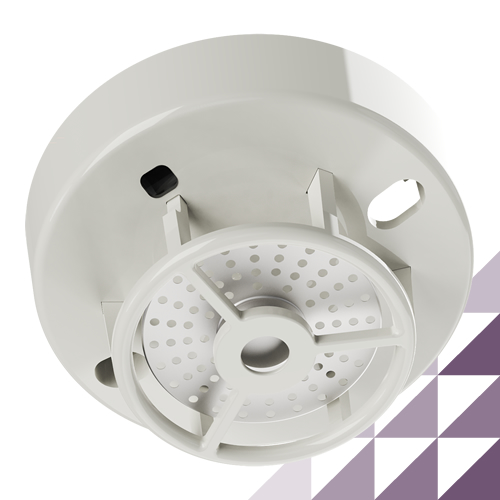
Heat detectors suitable for harsh environments typically incorporate fixed temperature sensing, rate-of-rise sensing or a combination of both. Fixed temperature elements respond when a defined threshold is reached, while rate-of-rise elements detect rapid increases in temperature indicative of a developing fire. Combining these approaches allows detection of both fast and slow-developing fire scenarios.


Orientation tolerance is another important consideration. In challenging installations, ideal mounting positions are not always achievable. Devices that can sense temperature reliably regardless of whether they are mounted horizontally or vertically provide greater flexibility and consistency of performance.


Addressable and conventional system compatibility should also be considered at the design stage. In some cases, conventional heat detection may be appropriate, while in others integration into an addressable system is required to support zoning, monitoring and data collection. The ability to interface different detection types into a wider system can provide flexibility during upgrades or refurbishments.


Bin Fires 04

Approvals and third-party certification

As with all fire detection equipment, third-party certification is essential. Heat detectors used in communal and enclosed spaces should be approved to EN54-5 and certified by recognised bodies such as LPCB and VdS. These approvals provide assurance that devices meet defined performance criteria and will operate reliably within their specified parameters.


For fire safety professionals, referencing these standards within fire strategies and specifications helps demonstrate due diligence and supports consistency across projects. In environments where detection reliability is critical, certification is a baseline requirement rather than an optional enhancement.


page break

Waste management and prevention

Detection technology alone cannot address the root cause of battery-related fires. Effective risk management also requires improved waste handling practices and occupant education. Batteries and battery-powered devices should never be placed in general waste or mixed recycling. Clear signage, communication campaigns and engagement with residents can reduce the likelihood of incorrect disposal.


Damaged or swollen batteries present a particular hazard and should be isolated and stored safely until they can be recycled. Waste contractors and facilities teams should be trained to recognise these risks and respond appropriately.


Fire risk assessments should explicitly consider waste management arrangements, including the location of bin stores, frequency of collection and procedures for dealing with hazardous items. Where battery fires have already occurred, lessons learned should inform updates to the fire strategy.


Battery-initiated fires in communal waste areas, external bin stores and underground car parks represent a growing and evolving risk. These incidents are driven by changes in consumer behaviour, the widespread use of battery-powered devices and inappropriate disposal practices. For fire safety professionals, addressing this risk requires a combination of suitable detection technology, environmental resilience, physical protection and robust waste management.


By selecting detection strategies that reflect the realities of harsh and uncontrolled environments and by ensuring devices are appropriately rated and certified, facilities managers and building owners can improve early detection and reduce the likelihood of small ignition events escalating into serious incidents.

Heat detection in harsh environments

  • Detection type: Fixed temperature and rate-of-rise heat detection, or a combination of both

  • Environmental rating: IP67, indicating dust-tight construction and protection against temporary water immersion

  • Mounting considerations: Reliable operation in horizontal or vertical orientations


  • System compatibility: Conventional or addressable systems, with interface options where required

  • Certification: Approved to EN54-5 by recognised third-party bodies such as LPCB and VdS

  • Typical applications: External and semi-external bin stores, underground car parks, wash-down areas and other environments subject to moisture, dust and contamination