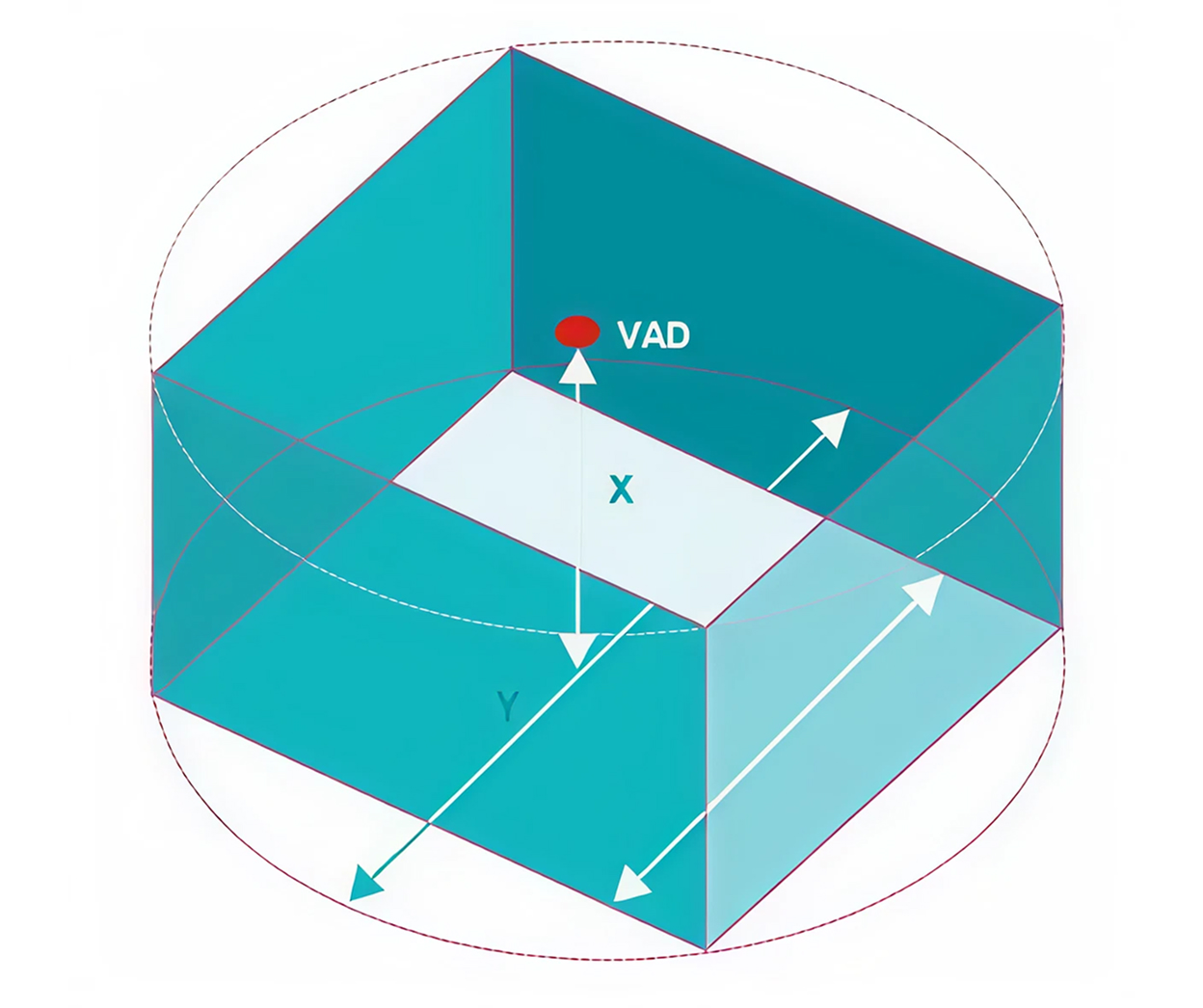
Calculating Coverage Volume
The requirement for VADs will be identified as part of a risk assessment. As with other fire alarm system components, there are a number of challenges that must be considered in the layout, design and installation of VADs. One challenge is the illumination of the entire volume of the open space where the alarm must be visible. VADs must produce sufficiently intense light so that an individual located anywhere in the space, looking either towards or away from the VAD, would be alerted in the event of an emergency.
The performance of VADs under the standard is assessed against a minimum required illumination of 0.4 lux on surfaces perpendicular to the direction of the light emitted from the device.
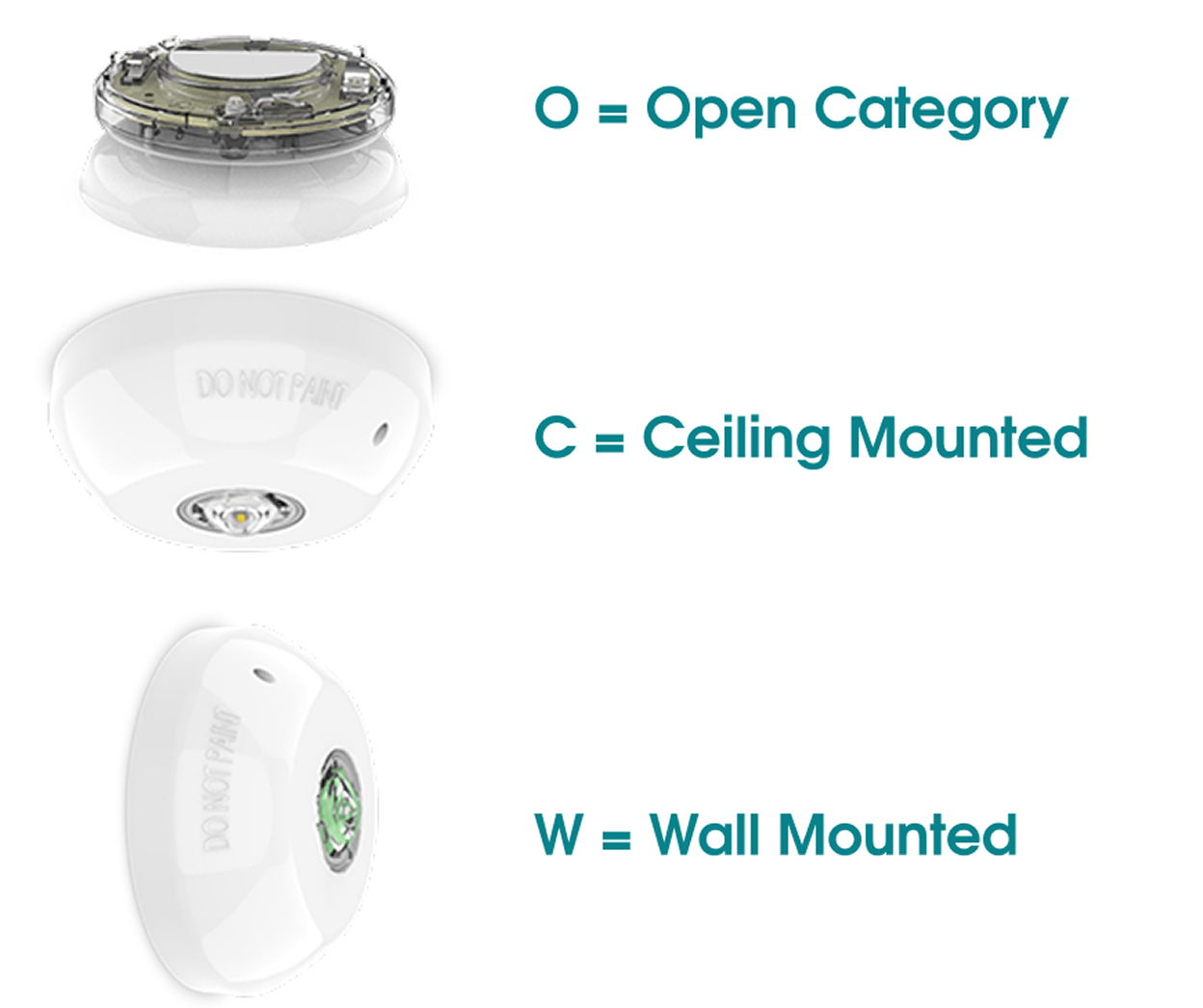
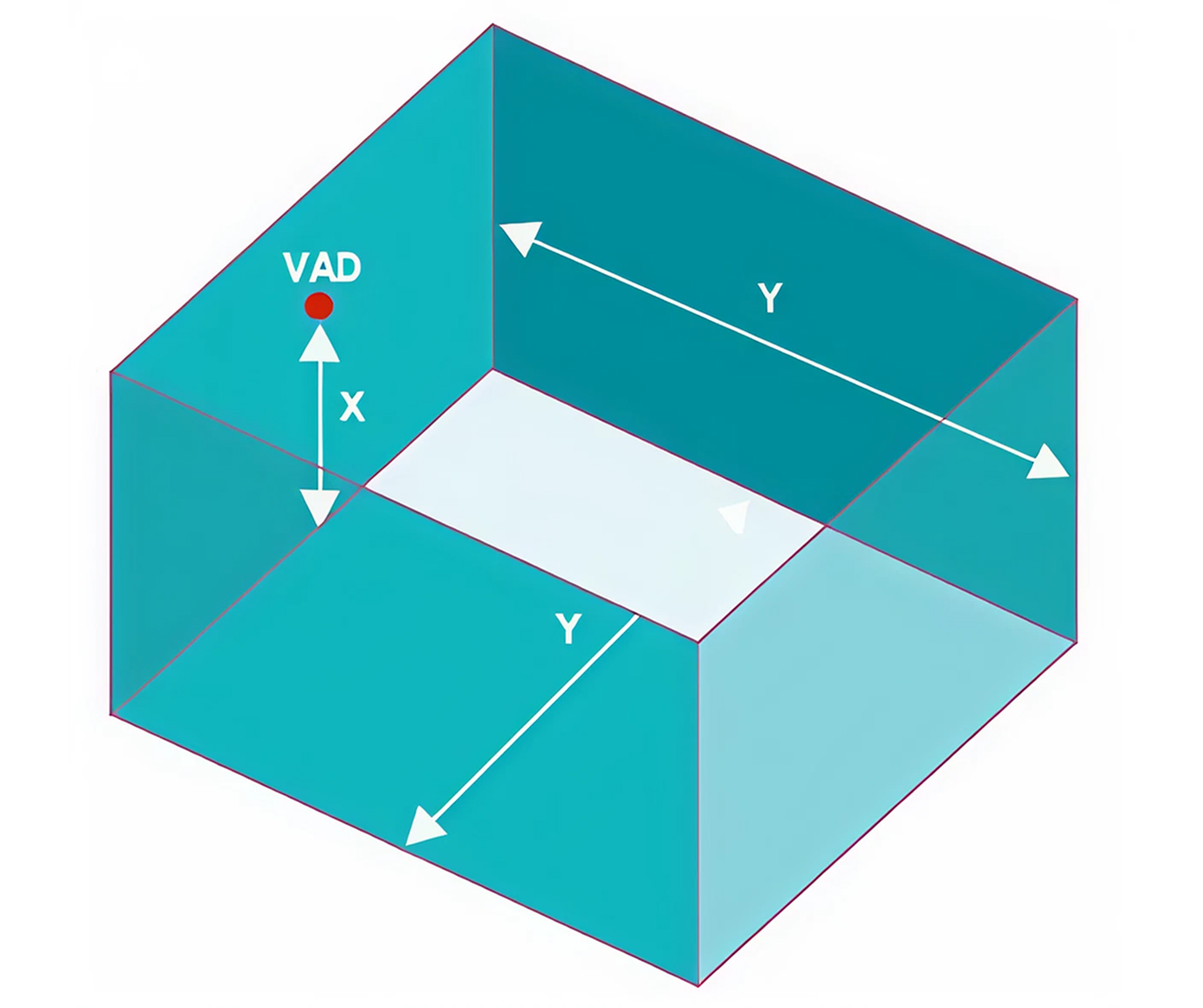
VADs are generally classified into three categories based on their application: W and C mounted categories pertain to specific installation heights and patterns of coverage – see the below table for more information. Within these two categories, the shape of the volume covered is fixed by the standard – a cylinder for the celling mounted category and a cube for the wall-mounted category. The dimensions of this coverage volume and the mounting height are specified by the manufacturer. For all categories, the volume covered can be used to determine VAD spacing within the building.