Hochiki On... Understanding Hybrid Wireless Fire Detection Systems

Part of our educational life safety series for building owners, this article explores what a hybrid wireless fire detection system is, how they work, the key features and why your building might need one.

hochiki_on_article_02_web_page_header_4096x2048

What is a Hybrid Wireless Fire Detection System?

A hybrid wireless fire detection system represents an innovative fusion of traditional wired technology and cutting-edge wireless solutions. These systems allow building owners to implement comprehensive fire detection coverage by combining hardwired components with wireless devices in a single, integrated network. For non-industry professionals managing properties, understanding this technology provides valuable insight into modern fire safety options that balance performance, flexibility, and installation efficiency.

Unlike traditional systems that rely entirely on cables running throughout a building, hybrid wireless solutions create a seamless network where both wired and wireless devices communicate effectively with the central control panel. This versatility makes hybrid systems particularly valuable in complex building environments where traditional wiring might present challenges.

The Evolution of Fire Detection Technology

Fire detection has undergone significant transformation over the last few decades. Traditional wired systems have long been the industry standard, providing reliable performance but often requiring extensive installation work. Fully wireless systems emerged as an alternative, offering easier installation but initially facing challenges with reliability and battery management.

Hybrid wireless technology represents the next evolutionary step, addressing the limitations of both approaches. By combining the dependable performance of wired components with the flexibility of wireless devices, these systems deliver robust protection while adapting to the specific needs of different building types and configurations.

fire_engineer_2_2

How Hybrid Wireless Systems Operate

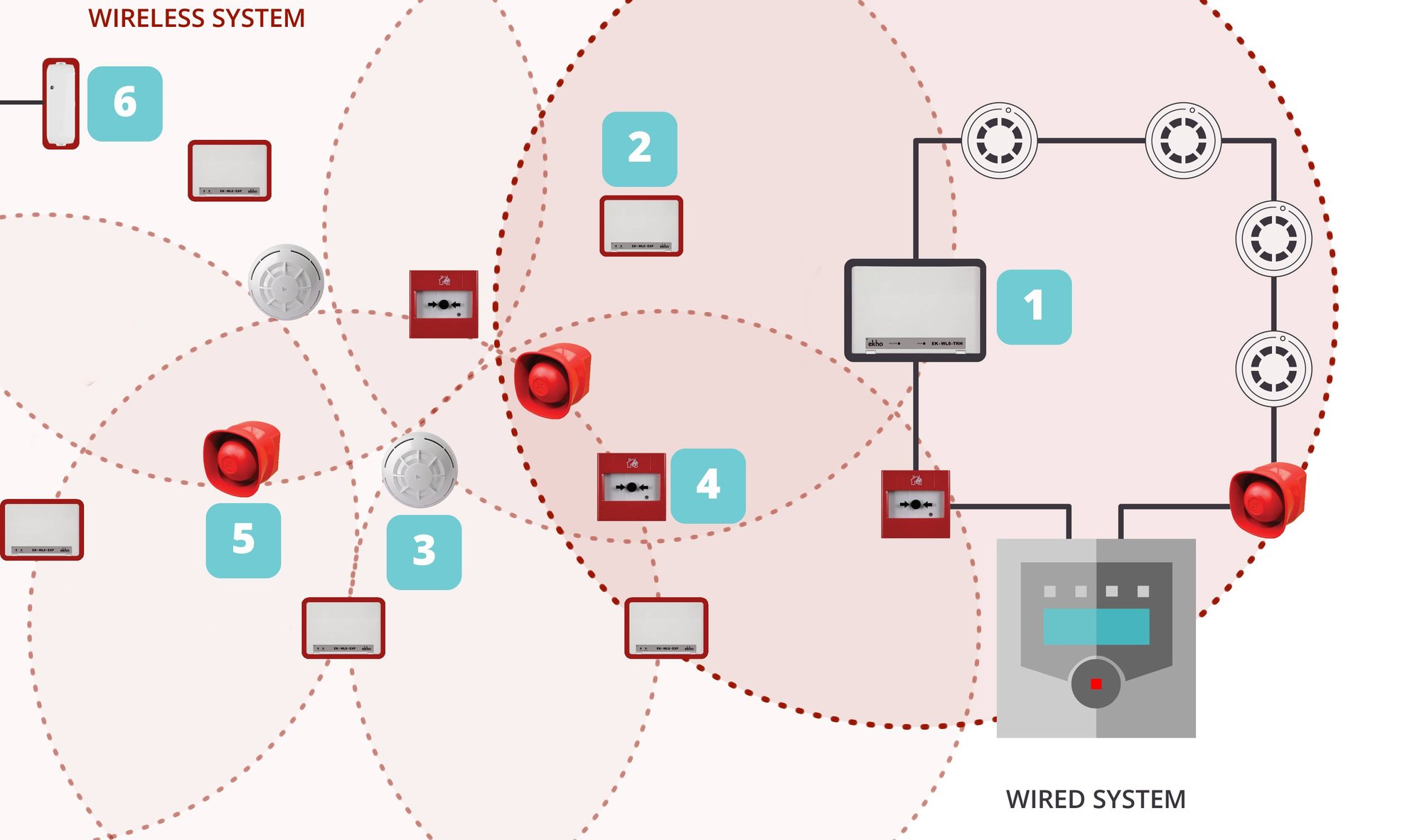
At the heart of any hybrid wireless fire detection system is the control panel, which serves as the central processing unit for the entire network. This sophisticated unit manages communication with both hardwired devices connected directly through cables as well as the wireless components that transmit data via radio frequency signals.

The wireless portion of the system typically includes:

1_icon4

Translators

These devices convert wireless signals into a format the main control panel can interpret, essentially bridging the wireless and wired parts of the system.

2_icon

Expanders

These units extend the wireless network coverage across larger buildings or complex layouts, ensuring comprehensive communication throughout the property.

3_icon

Wireless Sensors

Including smoke, heat, and multi-sensor devices that monitor for fire conditions and transmit status information to the control panel.

hybrid_wireless_system_example3
4_icon

Wireless Call Points

Manual alarm activation points that allow building occupants to trigger the alarm system in an emergency.

5_icon

Wireless Alarms

Electronic sounders and strobes that are activated in a fire condition to alert building occupants

6_icon

Input/Output Modules

Devices that enable integration with other building systems such as door holders, ventilation controls, or elevator recall functions.

Key Advantages for Building Owners

architecture2

Architectural Preservation

For owners of historic or architecturally significant buildings, hybrid wireless systems offer a way to implement modern fire safety without compromising aesthetic integrity. Wireless devices can be strategically placed without running cables through historic walls, preserving original features while meeting contemporary safety standards.

construction

Installation Flexibility

Hybrid systems provide exceptional adaptability to building constraints. Areas that are difficult to access or where cable installation would be disruptive can be covered using wireless devices, while more accessible sections can utilise traditional wired components. This flexibility often translates to reduced installation time and minimised business disruption.

futureproof

Scalability and Futureproofing

As building requirements change, hybrid systems can be expanded with relative ease. Additional wireless devices can be integrated without extensive rewiring, making the system adaptable to evolving building layouts or changing occupancy patterns. This scalability protects the initial investment by allowing the system to grow alongside the building's needs.

efficient

Cost Efficiency

While wireless components may have a higher unit cost than their wired counterparts, the overall installation expense often proves more economical due to reduced labour and minimised structural disruption. Building owners should consider the total cost of ownership, including installation, maintenance, and potential renovation expenses when evaluating system options.

Reliability Considerations

Modern hybrid wireless systems incorporate several features to ensure dependable performance: 

mesh_network

Mesh Network Technology

Many systems utilise mesh networking, where each wireless device can choose its own signal pathway back to the translator and control panel, usually via the nearest expander. This creates multiple communication pathways, eliminating single points of failure.

network_checks

Regular Communication Checks

Devices perform automatic check-ins with the control panel at programmed intervals, providing constant system status monitoring.

battery_life

Extended Battery Life

Contemporary wireless devices typically offer 3-10 years of battery operation (dependent on operational usage), with low-battery warnings provided well in advance of replacement needs.

frequency

Frequency Diversity

Systems often operate across multiple radio frequencies, automatically selecting the clearest channel to avoid interference. Manufacturers of these systems will often also provide specific ranges for operation at specific regional frequencies.

compliance

Compliance

In Europe, wireless fire detection components must meet the rigorous requirements of EN54 Part 25, ensuring they provide performance equivalent to wired systems. The Radio Equipment Directive (RED) established a regulatory framework for placing radio equipment on the market in the EU. All radio equipment within the scope of this directive released into the EU market must be compliant with the directive, which came into effect in 2017.

Practical Applications

Hybrid wireless fire detection proves particularly valuable in several building scenarios:  

castle

Heritage Properties

Where preservation requirements limit physical alterations to the structure.

factory

Operational Facilities

Where business continuity during installation is crucial and minimal disruption a requirement.

phased_renovations

Phased Renovations

Where protection must be maintained during gradual building updates.

mixed_development

Mixed-Use Developments

Where different areas have varying installation requirements.

asbestos

Asbestos Sites

Where a presence of asbestos means any form of drilling or penetration of the building infrastructure is prohibited.

remote buildings

Remote Buildings

Where connecting outlying structures to the main system presents challenges.

Implementation Best Practices

For building owners considering hybrid wireless fire detection, several key considerations should guide the decision-making process:  

site_survey

1 - Professional Site Survey

Before installation, a qualified fire system specialist should conduct a comprehensive radio signal survey to identify potential interference issues and optimal device placement.

system_design

2 - System Design

Work with certified professionals familiar with both the technology and relevant fire safety standards to ensure compliant, effective coverage.

maintenance_plan

3 - Maintenance Planning

While wireless components reduce some maintenance needs, they introduce battery management requirements. Establish a clear maintenance schedule that addresses both wired and wireless elements.

building_plans

4 - Documentation

The building owner should retain detailed records of the system layout, including the location of all wireless devices, to facilitate future maintenance and modifications.

Conclusion

Hybrid wireless fire detection systems represent a significant advancement in life safety technology, offering building owners an effective balance between performance, flexibility, and installation efficiency. By understanding the capabilities and applications of these systems, property managers and building owners can make informed decisions about implementing fire protection that meets both regulatory requirements and practical building needs.

As with any life safety system, consultation with qualified fire protection professionals remains essential to ensure proper design, installation, and maintenance. When correctly implemented, hybrid wireless technology provides reliable protection while adapting to the unique characteristics of each building environment.


ekho_group_shot_500