Hochiki On... Understanding Addressable Fire Detection Systems

Part of our educational fire safety series for building owners, this article explains what an addressable fire detection system is, how they work, their key features and benefits and why your building needs one.
hochiki_on_article_01_web_page_header_4096x2048

What Is an Addressable Fire Detection System?

An addressable fire detection system represents the modern evolution of fire safety technology, designed to provide precise information about the location and nature of potential fire threats within a building.  Unlike conventional systems that only indicate which zone has been triggered, addressable systems can pinpoint the exact device that has activated, allowing for faster response times and reduced false alarms.

How Addressable Systems Work

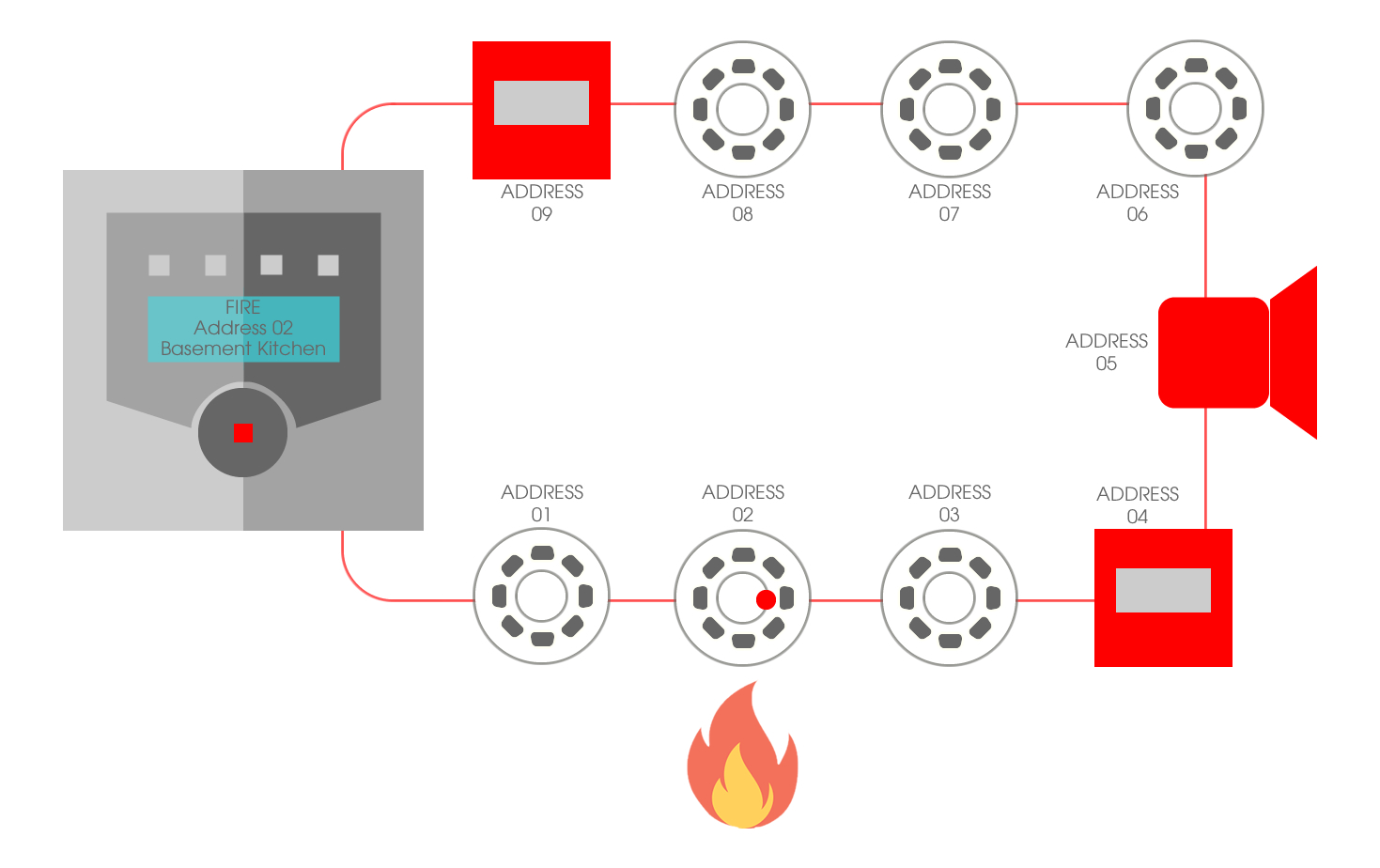
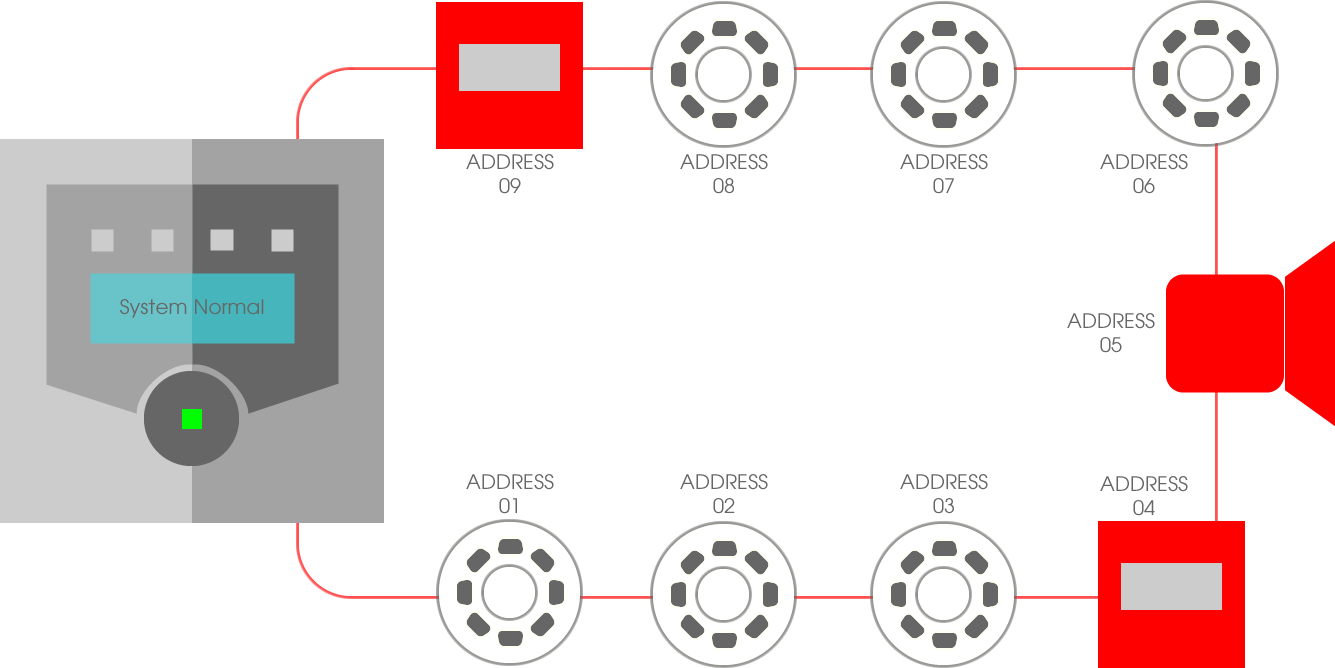
At its core, an addressable fire detection system operates through a network of individually identifiable devices connected to a central control panel. Here's how the system functions:

Individual Device Identification

Each detector, call point, and notification device in the system has a unique electronic "address" or identifier.

Central Control Panel

The heart of the system, this sophisticated computer continuously monitors all connected devices, processing information from throughout the building.

Communication Loop

Devices connect to the control panel via a communication loop or "addressable loop." This wiring configuration allows two-way communication between the panel and each device.

system_diagram_normal

Intelligent Monitoring

The system constantly checks the status of each device, monitoring for alarm conditions, faults, contamination levels, and other performance metrics.

Precise Alarm Identification

When a device detects a potential fire condition, it sends its specific address to the control panel, which displays the exact location of the triggered device.

Key Features and Benefits

location

Enhanced Location Precision

The system identifies exactly which device has been activated, displaying its specific location within the building. This precision dramatically reduces search time during an emergency, allowing responders to go directly to the affected area.

verified_alarm

Intelligent Alarm Verification

Modern addressable systems can verify alarm conditions through various methods: Coincidence confirmation (requiring multiple devices to activate before triggering a full alarm), Pre-alarm warnings for investigation and Drift compensation (adjusting sensitivity as devices age).

false_alarm

Reduced False Alarms

The intelligence built into addressable systems significantly reduces false alarms through: Individual device sensitivity adjustments, Environmental compensation and Alarm verification capabilities.

system_health3

System Health Monitoring

The system continuously monitors itself, alerting maintenance staff to: Devices requiring cleaning, Component failures, Wiring faults, and Battery conditions.

programming

Flexible Programming

Addressable systems can be programmed with sophisticated cause-and-effect scenarios, such as: Phased evacuations for large buildings, Custom notification sequences and Integration with other building systems.

scalability

Scalability

The system can easily expand as building needs change: Additional devices can be added to existing loops, Minimal wiring changes required for system expansion and Networking capabilities for multi-building campuses.

Practical Applications for Building Owners

Daily Operation

Under normal conditions, the control panel displays a "system normal" status. Regular testing and maintenance ensure the system remains fully operational, with most systems capable of scheduling automatic tests during off-hours.


During an Alarm Event

When a device activates:

  • The control panel displays the exact device location and type

  • The system executes pre-programmed responses

  • Building staff can quickly investigate specific locations

  • Emergency responders receive precise information about the incident location

Maintenance Benefits

Addressable systems significantly reduce maintenance time and costs:

  • Specific fault identification eliminates guesswork

  • Remote diagnostics capabilities

  • Predictive maintenance alerts

  • Detailed event logging for troubleshooting


system_diagram_fire4

Is an Addressable System Right for Your Building?

Addressable fire detection systems are particularly valuable for:

  • Medium to large buildings

  • Multi-floor structures

  • Buildings with complex layouts

  • Facilities requiring phased evacuation

  • Properties housing sensitive operations or occupants with mobility challenges*

*Note that BS 5839 Part 1:2017 (see below) recommends addressable fire detection systems are installed in any building housing more than 10 people needing assistance in evacuating, for example, large care homes.

While the initial investment in an addressable system may be higher than conventional systems, the long-term benefits often result in lower lifetime costs through:

  • Reduced false alarms
  • More efficient maintenance
  • Enhanced life safety
  • Potential insurance premium reductions
  • Scalability for future expansion


British Standard BS 5839 Part 1:2025

Your Compliance Framework

BS 5839 Part 1 is the British Standard that provides the code of practice for design, installation, commissioning, and maintenance of fire detection and alarm systems in non-domestic premises. This standard is crucial for building owners to understand as it underpins the legal framework for fire safety systems in the UK.

Hochiki Europe has produced a short summary guide booklet, updated to the 2025 revision,  covering the salient points of  BS5839-1, this is available digitally as a download from our Literature page.

bs5839_cover

System Categories and Grades

BS 5839-1 defines different system categories based on the building's purpose and risk assessment.

Your addressable fire detection system must be designed and maintained to meet the appropriate category for your building, as determined by your fire risk assessment.

Category L Systems: For the protection of life

  • L1: Maximum protection covering all areas
  • L2: Protection in defined areas and escape routes
  • L3: Protection of escape routes only
  • L4: Protection of escape routes with manual call points
  • L5: System designed for specific fire risk

Category P Systems: For property protection

  • P1: Maximum protection covering all areas
  • P2: Protection in defined high-risk areas


Documentation Requirements

BS 5839-1 requires comprehensive documentation for your fire detection system, including:

  • Design certificates

  • Installation certificates

  • Commissioning certificates

  • Verification certificates (for existing systems)

  • Maintenance certificates

  • Modification certificates (when applicable)

An addressable system's advanced logging capabilities make maintaining these records significantly easier.


The Role of the 'Responsible Person'

Under UK fire safety legislation (specifically the Regulatory Reform (Fire Safety) Order 2005 in England and Wales), every non-domestic premises must have a designated 'Responsible Person' for fire safety.

clipboard

Legal Duties for System Maintenance

As the Responsible Person you have specific legal obligations regarding your fire detection system:

automation-testing

Regular Testing

BS 5839-1 mandates: Weekly testing of a manual call point (different one each week) - Monthly functional tests of auxiliary equipment - Quarterly inspections by a competent person - Annual inspection and testing of all devices by a competent service provider.

maintenance_records

Maintenance Records

You must maintain detailed records of: All system tests and inspections - Any faults detected - Remedial actions taken - False alarm incidents and investigations.

false_alarm

False Alarm Management

The standard requires implementing measures to minimise false alarms, including: Investigation of all false alarm incidents - Maintaining a false alarm log - Taking remedial action when patterns emerge.

staff_training2

Staff Training

Ensuring relevant staff understand: How to operate the system - How to respond to alarms and fault signals - The procedure for weekly testing.

Advantages of Addressable Systems for Compliance

Addressable fire detection systems offer significant advantages for meeting your responsibilities under BS 5839-1:

  • Enhanced Fault Reporting: Immediate identification of specific faulty devices

  • Detailed Event Logs: Automatic recording of all system events with date and time stamps

  • Maintenance Alerts: Advanced warning of devices requiring attention

  • False Alarm Reduction: Sophisticated verification features reduce unwanted alarms

  • Testing Efficiency: Ability to test devices without triggering full evacuation

Non-Compliance Consequences

Failure to properly maintain your fire detection system can result in:

  • Prosecution under fire safety legislation

  • Financial penalties

  • Invalidation of building insurance

  • Potential criminal charges in the event of fire-related injuries or fatalities

  • Prohibition notices preventing the use of all or part of your premises

Most critically, a poorly maintained system may fail when you need it most, putting lives at risk.

Developing a Maintenance Strategy

To fulfil your duties as the Responsible Person, consider implementing a structured maintenance strategy:

service_agreement

Service Level Agreement

Establish a contract with a qualified fire system maintenance provider who understands addressable systems.

automation-testing

Maintenance Schedule

Create a calendar of all required weekly, monthly, quarterly, and annual tests.

fault_response

Fault Response Protocol

Develop procedures for addressing different types of system faults.

training_program

Staff Training Program

Ensure relevant personnel receive proper training on system operation and testing procedures.

system_documentation

System Documentation

Maintain a comprehensive system file including: As-installed drawings - Operation and maintenance manuals - All certification and test records - Contact details for maintenance providers