ACD — The Only True Multi-Sensor

The Hochiki ACD delivers 24 EN-approved modes of operation, combining optical smoke, heat, CO, and COHb detection in a single addressable device for accurate, reliable fire detection across a broad range of building environments.

ACD on teal concrete

Fewer unwanted alarms, with detection matched to every space

The award-winning ACD Multi-Sensor monitors smoke and heat alongside carbon monoxide and its 24 EN-approved modes allow each detector to be set for the space it protects, from open-plan offices to kitchens and plant rooms. A smart algorithm helps it distinguish everyday conditions from a real fire, reducing unwanted alarms.

The ACD is LPCB approved to EN 54 Parts 5, 7, 26, 29, 30 and 31, and won an award at Intersec 2026.

For specifiers and installers, that means a detector tested to the multi-sensor standards with ESP open protocol compatibility. For facilities managers, it means fewer unplanned evacuations and less disruption for the people in your building.

ACD_two_angles

Features

24_modes_icon2

24 Modes of Operation

The ACD multi-sensor offers 24 EN-approved modes of operation, combining optical, heat and CO sensing in different ways, so the detector can be matched to the risk profile of each area.

sensing_elements_icon

Incorporates Smoke, Heat & CO Elements

By combining optical smoke, heat and carbon monoxide sensing in one device, the ACD multi-sensor responds to a broader range of fire types than a single-technology detector.

chamber_icon_4

Removable, High Performance Smoke Chamber

The ACD features a high performance smoke chamber that can be removed from the detector head, making routine maintenance far simpler.

twin_leds_icon

Twin LEDs

Twin LEDs on the detector head provide clear status indication from any direction. The LEDs show green when the detector is polling normally and turn red when a fire is detected

sensitivity_icon

Variable Sensitivity

The ACD multi-sensor supports variable sensitivity, allowing the detector’s response threshold to be adjusted to suit the environment it protects.

smart_icon-1

SMART Algorithm

The built-in SMART algorithm continuously analyses the signals from the detector’s optical, heat and CO sensing elements, adjusting its responsiveness based on the environment around it, to reduce false alarms.

electronically_addressed_icon

Electronically Addressed

Each ACD detector is electronically addressed, so its address is set using the control panel or programming tool rather than by physical switches or dials on the device, speeding up installation and commissioning.

lpcb_approved_icon

LPCB Approved

The ACD multi-sensor is approved by LPCB to EN 54 Parts 5 (heat), 7 (smoke), 26 (carbon monoxide) and the multi-sensor standards 29, 30 and 31, which cover the combinations of smoke, heat and CO sensing.

colours_icon

Available in ivory or white

The ACD is available in white or ivory, so the detector can blend in with the surrounding décor in a wide range of building types. Both colour options offer the same performance and specification.

Product Videos

Our ACD multi-sensor product spotlight video (8 mins) showcases its functionality and application in real-world environments, its  key features, technical and operational capabilities and installation guidance.

The ACD Explainer video (3.5 mins) provides a simple summary of the sensor's capabilities.

Fully Approved Certifications and Compliance You Can Rely On

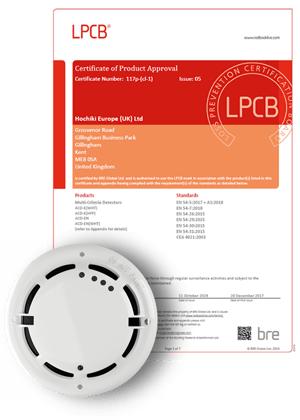
The ACD multi-sensor carries comprehensive LPCB approvals across EN 54-5, EN 54-7, EN 54-26, EN 54-29, EN 54-30, EN 54-31, and CEA 4021:2003, providing specifiers and building managers with the assurance of independently verified performance and regulatory compliance.

ACD_and_lpcb_cert

Why It's Important to Read the Small Print

When it comes to multi-sensors, the testing and approval process isn’t as clear cut as with more traditional sensors. As more and more advanced detection methods have come into play, the testing methods and resulting certification has also advanced. 

Multi-sensors that claim to utilise multiple types of sensing elements to determine a fire condition should be tested to multiple European standards, if they claim to be a true multi-sensor.
 
It's no longer technically correct to claim to be a true multi-sensor if a product is only tested to Part 5 (heat) and Part 7 (smoke) of the EN 54 standard. 
 
Unfortunately, what is seen most often are sensors claiming to be multi-sensors but approved only to EN 54 Part 5 or Part 7, not to some of the newer multiple criteria standards such as Parts 29, 30 and 31.


EN 54-29

"Multi-sensor fire detectors - Point detectors using a combination of smoke and heat sensors".


EN 54-30

"Multi-sensor fire detectors - Point detectors using a combination of carbon monoxide and heat sensors".


EN 54-31

"Multi-sensor fire detectors - Point detectors using a combination of smoke, carbon monoxide and optionally heat sensors".

From our standpoint here at Hochiki, we believe true multi-sensors should be able to demonstrate this intelligent, multiple criteria monitoring capability by being designed with these new published standards in mind from the outset.

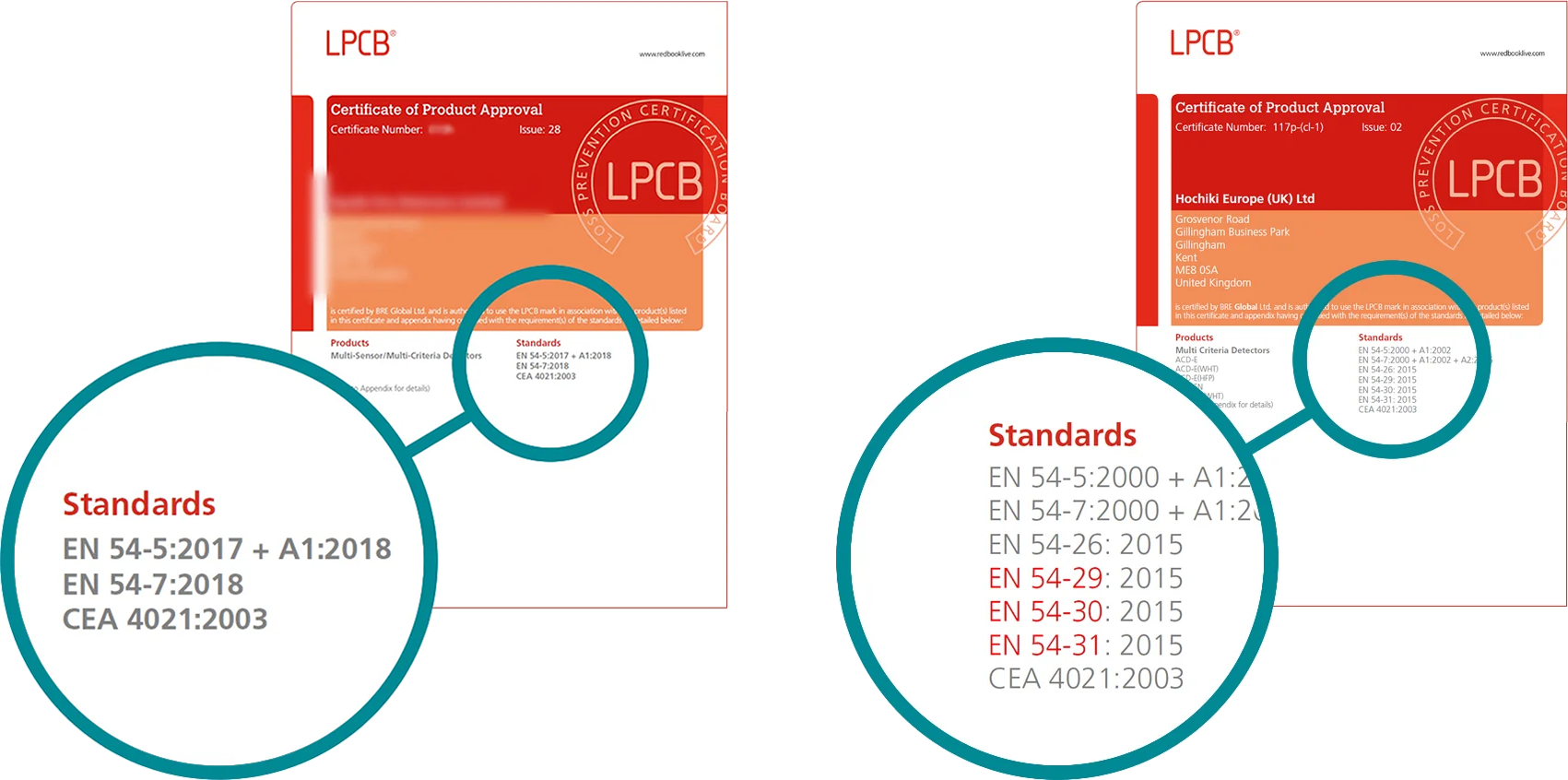
So our advice at this point is to check the manufacturer’s LPCB certificates – freely available on the LPCB’s own reference site “Red Book Live” to check a multi-sensor’s technical credentials. 

In the example certificates below, on the left, not a "True" Multi-Sensor, as smoke and heat elements have been tested independently (Part 5 and Part 7).  Whereas on the right, Hochiki's ACD Multi-Sensor with CO Approval Certificate shows it has been tested with smoke, heat and CO elements working together.


red_book_live_icon


2_multi_sensor_certificates

Hochiki's Multi-Sensors Given Glowing Review at Riverside Studios

“Riverside was a complex project with multiple environments, which required technical expertise and support. We were confident in Hochiki and the ACD multi-sensor devices, they were the perfect solution for Riverside.”


Neil Thurgood, project engineer, Cornerstone Fire Systems

Read more